 By Caleb
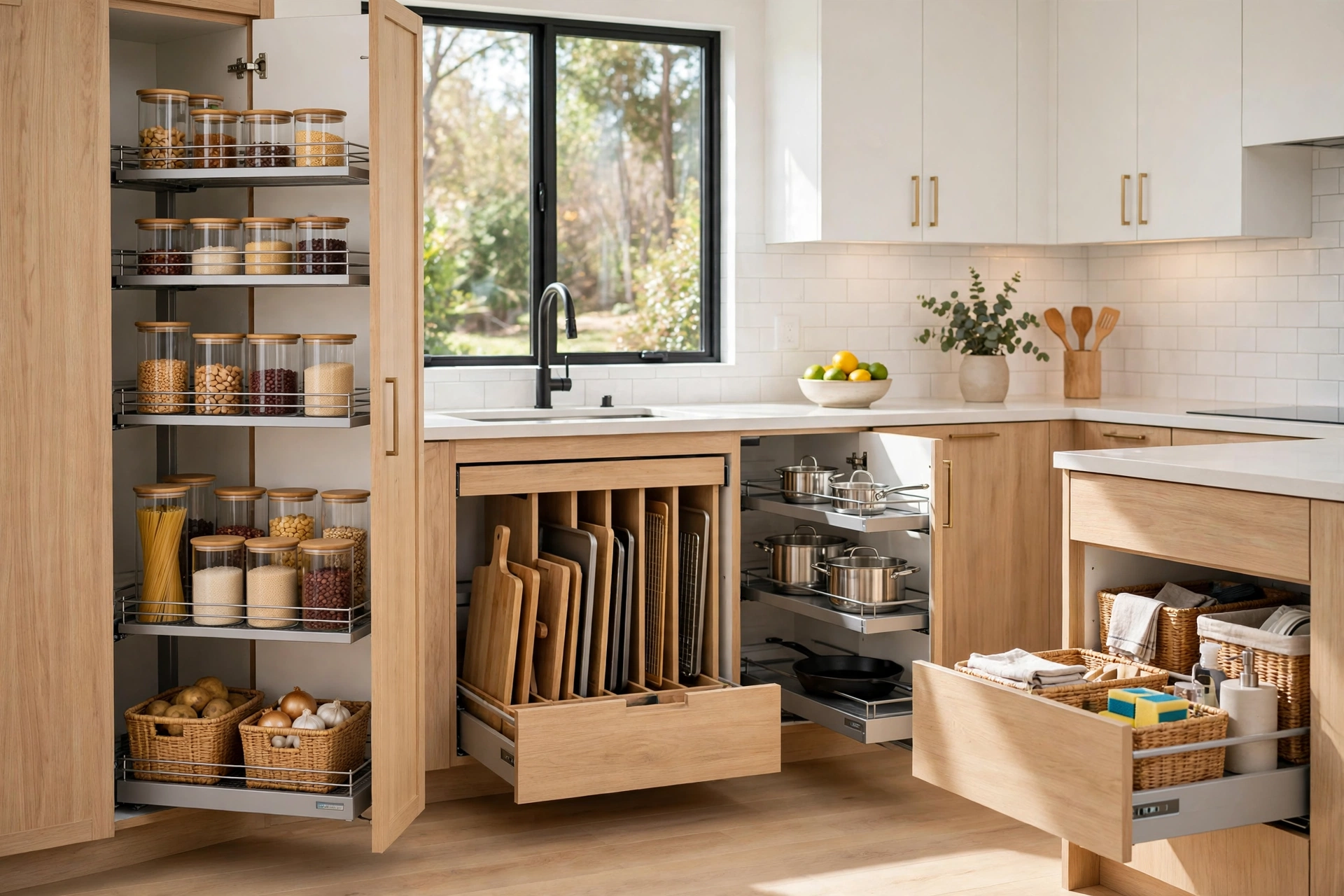
A cleaner kitchen is rarely the result of more cleaning. It is the result of better storage, because every item that has a proper home is an item that never ends up on the counter. Modern kitchens work best when storage is designed around how you actually cook: the things you use daily within easy reach, and the things you rarely use stored high or deep. This guide shares creative storage ideas that make a modern kitchen cleaner, calmer, and far more functional, without adding a single square metre.
How a Cleaner Kitchen Starts With Storage, Not Cleaning
Cluttered counters are usually a storage problem wearing a cleaning disguise. When cabinets are deep, dark, and hard to reach, it is easier to leave things out than to put them away, so the worktop slowly fills with appliances, jars, and utensils. The fix is to make putting things away faster than leaving them out. That means storage that brings items to you, such as pull-outs and drawers, rather than storage you have to climb inside to use.
Start by emptying one cabinet at a time and sorting honestly: daily, weekly, rarely, and never. Daily items earn the easiest spots, at waist to shoulder height near where they are used. Weekly items can live higher or deeper. Rarely used items belong on the highest shelf or in another room entirely, and never-used items should leave the kitchen. This simple sort often frees a surprising amount of space before you buy a single organiser, and it tells you exactly what kind of storage you actually need.
Deep Drawers and Pull-Outs That End the Dark Cabinet Dig
Deep drawers have quietly replaced lower cabinets in modern kitchens, because a drawer brings its contents to you. Pots, pans, mixing bowls, and food containers all glide forward into full view, with dividers to stop them sliding into a jumble. Heavy items belong in deep drawers near the cooker, fitted with sturdy under-mount slides that can carry the weight without sagging.
Pull-out trays work the same magic inside existing cabinets. A rollout tray behind a door pulls forward smoothly, so you can see and reach everything without kneeling or emptying the front to reach the back. Narrow pull-outs are ideal for the slim gap beside a cooker or fridge, turning dead space into vertical storage for spices, oils, and cleaning supplies. If you can only afford one upgrade, pull-outs in the lower cabinets give the biggest daily improvement for the money.
Pantry Storage That Keeps Every Ingredient Visible
A good pantry is a system, not a cupboard. Group ingredients the way you cook: baking together, breakfast together, spices together, and snacks in one place children can reach safely. Clear, airtight containers with labels let you see at a glance what is running low, and matching containers create a calm, streamlined look that makes the whole kitchen feel tidier. Shelf risers add a second level inside deep shelves, so small jars stop hiding behind tall ones.
Pull-out pantry shelves are the single best upgrade for a deep pantry, because they use the full depth of the cabinet while keeping everything reachable. A tall pull-out larder unit beside the fridge can hold a week’s groceries in a narrow footprint, and door-mounted racks use the inside of the door for spices and small bottles. Keep heavy items at waist height and the ingredients you reach for while cooking within one step of the hob.
Corner Cabinets, Slim Gaps, and Other Wasted Kitchen Space
Corner cabinets are notorious for wasting space, but modern fittings have solved the problem. A lazy Susan with independently spinning tiers, or a blind-corner pull-out that swings the shelves out into the room, brings everything in the corner into full view. The key is choosing a mechanism that moves smoothly when loaded, so test it in a showroom with weight on it before you buy. Avoid fixed shelves in corners entirely, because they guarantee a graveyard of forgotten items at the back.
Slim gaps are the other hidden opportunity. The 15-centimetre gap between cabinets, the space above the fridge, the kickboard beneath the cabinets, and the end panel of an island can all become storage. A toe-kick drawer under the plinth holds flat trays and baking sheets, while the top of wall cabinets, if they do not reach the ceiling, can hold rarely used items in labelled boxes. Floor-to-ceiling cabinetry eliminates the dusty gap above wall units altogether and can add up to a quarter more wall storage, while making the room feel taller and more built-in.
Countertop Clutter: What Stays Out and What Gets a Home
A clean-looking kitchen is mostly a question of what lives on the counter. The rule is simple: only the things you use every single day earn counter space, and everything else gets a home inside a cabinet. For most households that means a kettle or coffee maker, a knife block or magnetic strip, and perhaps a fruit bowl. Toasters, blenders, and food processors that are used twice a week belong in an appliance garage, a tall cabinet with a roll-up door, or a deep drawer with a power point inside.
What stays out should earn its place visually too. A beautiful chopping board, a stoneware utensil crock, or a small plant adds warmth without creating clutter. Corral the remaining items on a tray, which defines their territory and makes wiping the counter a one-lift job. Keep the area beside the hob clear for cooking, and the area beside the sink clear for washing up.
Vertical Storage: Walls, Doors, and Ceiling-Height Cabinets
Kitchens run out of floor space long before they run out of wall space, so look up. Floating shelves offer a sleek, modern way to store everyday dishes and glassware within easy reach, and their open design keeps the room feeling light. Use them for the pretty things you use daily, and keep the mismatched or rarely used items behind closed doors. A magnetic knife strip frees a whole drawer, and a wall-mounted rail with hooks holds utensils, mugs, and small pans exactly where you cook.
The inside of cabinet doors is free storage that most kitchens ignore. Door organisers hold spices, cleaning supplies, foil, and small gadgets, freeing shelf space for larger items. A pull-down shelf unit in an upper cabinet brings hard-to-reach items down to you, which is a genuine help in kitchens with high ceilings.
Kitchen Storage That Hides Waste, Recycling, and Cleaning Gear
Bins and cleaning supplies are the items most likely to spoil a clean kitchen, because they are bulky, ugly, and used constantly. Integrated bins inside a cabinet keep waste and recycling out of sight while remaining easy to reach, and a tall, narrow cabinet near the sink can hold a mop, broom, and cleaning caddy. When waste and cleaning gear are hidden but reachable, the visible kitchen stays calm and the daily tidy takes minutes.
Storage Habits That Keep a Modern Kitchen Clean Week After Week
Storage systems only stay clean if the habits match them. The most useful habit is the one-in, one-out rule: when a new gadget, mug, or container enters the kitchen, an old one leaves. A second habit is the nightly reset: two minutes putting items back in their homes and wiping the counters, so the kitchen starts each morning clean.
Labelling is the habit that makes shared kitchens work, because everyone in the household can put things away correctly without asking. Label pantry containers, drawers, and the inside of cabinet doors where it matters, and keep the labels simple and honest. Review the system every few months: if a drawer is always messy, the system is wrong, not the family. Move the dividers, change the grouping, or give the overflowing category more space, and the kitchen will stay clean with far less nagging.
Kitchen Storage Mistakes That Create More Clutter Than They Solve
The most common storage mistake is buying organisers before sorting. A drawer full of dividers still holds too much if nothing was removed first, and a beautiful matching container set cannot fix a pantry that holds three years of expired food. Sort first, measure second, and buy organisers last, sized to the items that survived the sort. Another mistake is choosing open shelving for everything: open shelves look wonderful in photographs, but in a busy kitchen they collect grease and dust.
Depth is the other trap. Very deep shelves without pull-outs hide items at the back, and very deep drawers without dividers become a jumble the first time they are opened. Match the storage to the item: shallow drawers for utensils and cutlery, deep drawers for pots, tall narrow pull-outs for bottles. Finally, do not store heavy items above shoulder height or chemicals above food. A storage system that is awkward or unsafe to use will be abandoned, no matter how clever it looked in the showroom.
When Kitchen Storage Changes Need a Joiner or Fitter
Small storage upgrades, such as fitting dividers, door racks, shelf risers, and freestanding trolleys, are safe do-it-yourself jobs that need little more than a drill and a level. The line is crossed when cabinets are altered structurally, heavy wall units are fitted, or plumbing and electrics are moved. Wall cabinets must be fixed into studs or solid masonry with the correct fixings, because a loaded wall cabinet that pulls away from the wall is dangerous. A professional joiner or kitchen fitter will confirm the wall can carry the load and fit the units level and secure.
If your storage plan involves moving the sink, hob, or any gas or electrical point, bring in the licensed trades as well: a plumber for water and waste, a gas engineer for the hob, and an electrician for new sockets or under-cabinet lighting. Get a written quote that lists the units, fittings, and labour, and ask the fitter to confirm measurements before anything is ordered, because made-to-order cabinetry cannot be returned.
Final Thoughts: A Cleaner Kitchen Is a Storage System, Not a Chore
A cleaner, more functional kitchen is not a matter of willpower or more cleaning products. It is a storage system built around how you actually cook: drawers that bring things to you, a pantry you can scan in seconds, counters that hold only the daily essentials, and a home for waste and cleaning gear. Start with the sort, fix the worst cabinet first, and add one good pull-out or drawer system at a time.
Creative Kitchen Storage FAQs
What is the best storage upgrade for a small kitchen?
Deep drawers and pull-out trays give the biggest improvement, because they make every centimetre of an existing cabinet usable. Add a narrow pull-out for the gap beside the cooker, door organisers for spices, and floating shelves for daily dishes, and a small kitchen can feel far larger without any building work.
How do I keep my kitchen counters clear?
Only daily-use items earn counter space, and everything else gets a home inside a cabinet. Use an appliance garage or a deep drawer for the toaster and blender, corral the items that stay out on a single tray, and do a two-minute nightly reset.
Are open shelves a good idea in a kitchen?
Open shelves work well for everyday dishes and glassware that are used and washed constantly, because they stay clean through use. They are a poor choice for rarely used items, which collect grease and dust. Mix open shelves for the pretty daily items with closed cabinets for everything else.
How should I organise a deep pantry?
Group items the way you cook, use clear labelled containers so you can see what is running low, and add pull-out shelves so the back of the pantry is as reachable as the front. Keep heavy items at waist height, light items up high, and the ingredients you reach for while cooking within one step of the hob.
What is the cheapest way to improve kitchen storage?
Start by sorting and removing what you never use, which costs nothing and often frees a whole shelf. Then add low-cost organisers: drawer dividers, shelf risers, door racks, and stackable clear bins. These small additions make existing cabinets far more usable for a modest cost.
Should I hire a professional to fit kitchen storage?
Simple additions such as dividers, racks, and risers are easy DIY jobs. Hire a joiner or kitchen fitter for structural changes, heavy wall units, and anything involving plumbing, gas, or electrics. A professional fit keeps cabinets level, secure, and gliding smoothly, and it protects the warranty on made-to-order units.