 By Caleb
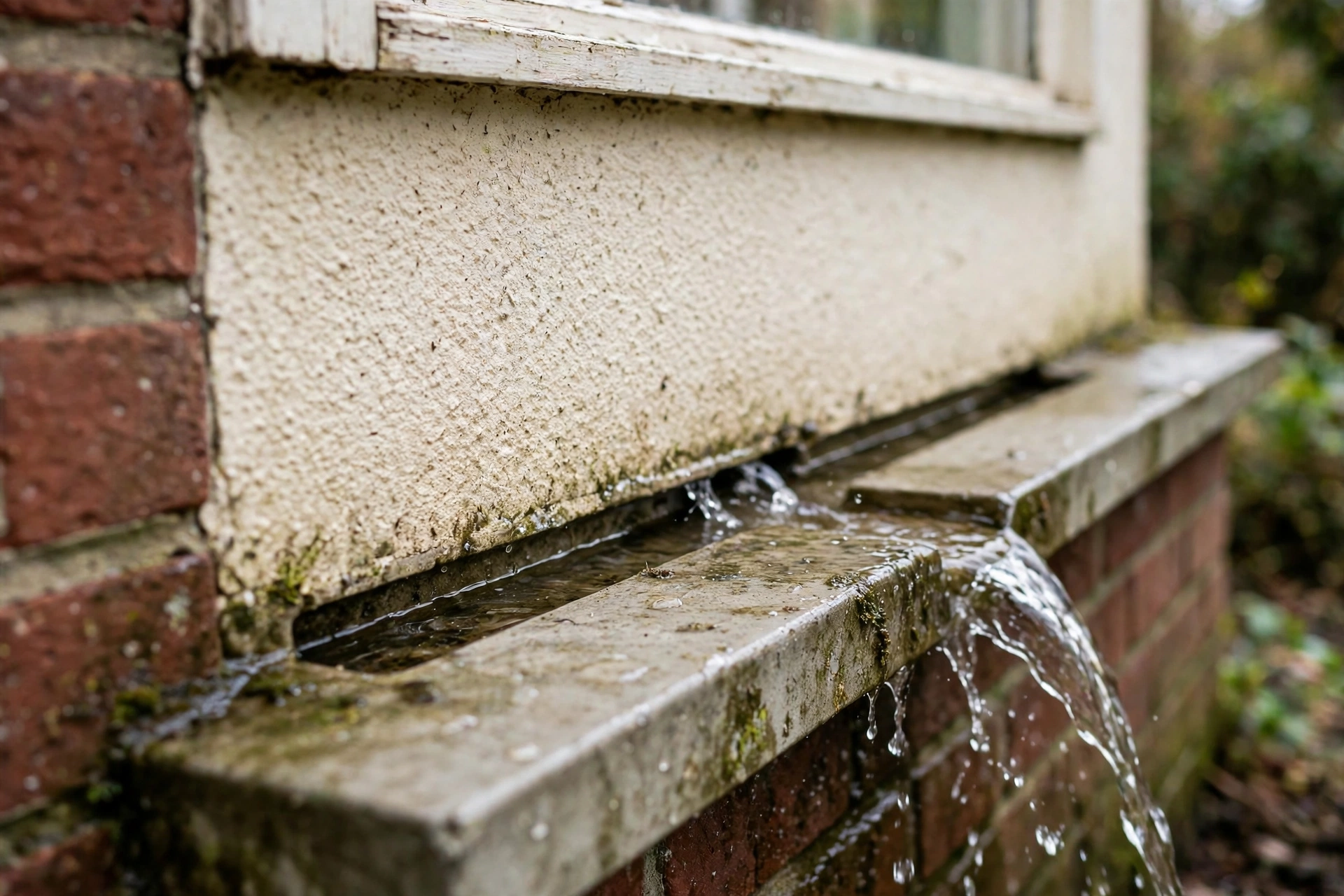
A window sill drainage channel is the small, sloped gutter hidden inside the bottom of a window frame, and its only job is to give water a way out before it can soak into the wall. Every window lets a little water past its outer seal — wind-driven rain, condensation, and spray all find their way in — and the drainage channel collects that water and guides it through weep holes to the outside. When the channel works, the wall stays dry. When it is blocked, missing or badly sloped, water pools inside the frame and slowly damages the seals, the timber and the wall below.
The damage from a failed sill channel is slow and quiet, which is what makes it expensive. Water trapped in a frame softens sealant, corrodes fasteners, feeds mould and eventually rots the sill and the wall framing beneath the window. Homeowners usually notice it late, as a damp patch under a window, peeling paint, or a window that sticks. Understanding how the channel works and keeping it clear is one of the cheapest forms of wall protection a house can have.
The Small Channel Under Your Window Does a Big Job
The sill channel sits at the bottom of the window frame, usually as a hollow track or a formed gutter with a built-in fall toward the outside. Rain that hits the glass runs down into the track, condensation that forms on the inside of the frame drips into it, and any water that gets past the outer gasket is caught there too. The channel then slopes gently outward, carrying the water to small openings called weep holes at the outer edge of the frame, where it drips harmlessly down the face of the wall.
The channel does a second job that is easy to miss: pressure equalisation. The cavity between the inner and outer seals is vented through the weep holes, so the air pressure inside the frame matches the pressure outside. Without that balance, wind pressure would push water deeper into the frame and past the inner seal. A blocked weep hole therefore does two kinds of damage at once: it traps water and it breaks the pressure balance that keeps water out.
Where Sill Water Comes From and Where It Needs to Go
Water reaches a window sill from four directions, and the drainage channel has to handle all of them. Wind-driven rain hits the glass and the sash and runs down into the track. Condensation forms on cold frame surfaces in winter and drips into the same channel. Spray from a hose or a pressure washer can force water past the outer seal. And in older windows, worn gaskets simply let more rain through than the channel was designed for. The channel’s job is to collect all of it and move it outward by gravity alone.
The exit path matters as much as the channel itself. Water leaving the weep holes should land on the exterior sill or flashing below and run clear of the wall, not dribble down the face of the cladding or pool on the sill nose. That is why the exterior sill is sloped, usually between 5 and 15 degrees, and why it should project slightly beyond the wall face with a drip groove underneath. If the water exits the weep holes but then sits on a flat sill, the channel has done its job and the sill has failed at the last step.
Weep Holes, Sill Channels and Pressure Equalisation Explained
A weep hole is a small engineered opening, typically a few millimetres wide, cut into the lowest point of the frame’s sill track. It is not a manufacturing defect and it should never be sealed shut — sealing a weep hole traps moisture inside the frame and defeats the weather performance the window was tested to deliver. The hole works with the sloped channel behind it: the channel gathers the water, the slope moves it to the lowest point, and the hole lets it out.
Modern frames use the weep holes as part of a pressure-equalised rainscreen system. The outer seal sheds most of the rain, the chamber behind it is vented to the outside through the weep holes, and the inner seal is the final barrier. When the chamber pressure equals the outside pressure, wind cannot drive water across the inner seal. That is why a blocked weep hole can cause leaks even in a window whose seals look perfect: the pressure difference alone can push water through gaps that gravity never would.
Drainage Designs Across Frame Materials Compared
Different frame materials handle sill drainage in different ways, because each material is formed differently. Aluminium frames are hollow extrusions with defined internal chambers, so the drainage path is precise and the weep holes are milled into the bottom rail. Vinyl frames use welded chambers with sloped internal tracks and weep slots that are easy to see from outside. Timber frames rely on the slope of the sill itself and a separate drainage groove, because wood cannot be hollowed out the same way. Fibreglass frames combine a rigid profile with moulded channels that resist warping.
| Frame Material | How the Channel Is Formed | Typical Weep Design | Main Risk |
|---|---|---|---|
| Aluminium | Hollow extrusion chambers | Milled slots in bottom rail | Corrosion around fasteners if blocked |
| Vinyl (uPVC) | Welded chambers, sloped track | Visible slots near track front | Slots clogged by paint or stucco |
| Timber | Sloped sill with drainage groove | Groove and drip edge below sill | Rot if water sits on the sill |
| Fibreglass | Moulded rigid channels | Concealed slots under sill lip | Hidden blockage hard to spot |
| Composite | Mixed core with formed channel | Slots or hooded outlets | Debris caught at hooded exits |
The practical point for a homeowner is that the cleaning method follows the material. Aluminium and vinyl weep slots can be cleared with a thin wire or a pipe cleaner and a rinse of water. Timber sills need the groove kept free of paint and the drip edge intact, because timber rots fast once water stands on it. Fibreglass and composite frames hide their drainage exits under the sill lip, so they need a closer look with a torch to find the slots before they can be checked.
Signs Your Sill Drainage Has Stopped Working
A failed sill channel announces itself in small ways long before it causes serious damage, and the signs are worth learning. Water pooling in the window track during rain is the clearest warning: if the track holds water after the rain stops, the channel or the weep holes are blocked. Peeling paint or staining on the wall below the window, mould on the inside of the frame, and a musty smell near the window are all later signs of the same problem.
- Standing water in the track: water that stays in the sill track after rain means the exit path is blocked.
- Damp or stained walls below: brown marks or bubbling paint under a window point to water escaping inward.
- Mould or mildew on the frame: persistent damp in the track feeds mould, especially on the inner seal.
- Windows that stick or swell: timber frames swell when they stay wet, and sashes start to bind.
- Debris visible in the weep slots: leaves, insect nests or paint overspray across the openings is a direct blockage.
The cheapest test is also the simplest: pour a small cup of water into the outer track on a dry day and watch where it goes. In a healthy window it should run along the channel and appear at the weep holes within seconds, then drip clear of the wall. If it sits, drains slowly, or appears inside the house, the channel needs attention. Do this test once a year on every window, and most drainage problems will be caught while they are still a five-minute cleaning job.
Clearing Blocked Weep Holes and Channels Safely
Clearing a sill channel is a gentle job, and force is the enemy. Start by brushing loose debris out of the track with a soft brush, then clear each weep hole with a thin wire, a pipe cleaner or a wooden skewer, working from the outside so debris is pushed out rather than deeper in. Rinse the channel with a small amount of water from a jug and watch it drain. Never use a pressure washer on a window frame: the pressure drives water past the seals and can damage the gaskets.
If the blockage is paint, scrape it carefully with a craft knife and touch up the frame afterwards. If it is an insect nest, remove it and consider a fine mesh weep cover that keeps insects out while letting water through. Check the exterior sill at the same time: if its slope has flattened or its drip groove is filled with paint, restore the slope with a thin bead of exterior sealant shaped to shed water, or have the sill re-dressed by a joiner. A clean channel plus a properly sloped sill is the whole system working as designed.
Sill Slope, Flashing and the Wall Below the Window
The channel inside the frame is only half the system. Outside the window, the sill and the flashing below it carry the water away from the wall, and if they fail, the water comes straight back. The exterior sill should slope outward at 5 to 15 degrees, project past the wall face, and have a drip groove on its underside so water falls clear instead of running back along the soffit. The flashing under the sill should lap over the cladding below, so any water that gets behind the sill is directed outward, not into the wall.
Where the window meets the wall, the head flashing above the window matters too, because it keeps water from running down the face of the wall and into the top of the frame. Check that the head flashing is intact and that the sealant joints around the frame are flexible and unbroken. Hard, cracked sealant is a sign it has aged out and needs replacing with a fresh bead of exterior-grade sealant, tooled to a smooth finish so water runs off it rather than sitting on it.
When Sill Drainage Trouble Points to a Bigger Wall Problem
Sometimes the sill channel is fine and the real problem is the wall itself. If water appears inside the house even after the channel and weep holes are clear, the likely causes are failed flashing, a missing damp-proof course, or water tracking through a crack in the cladding above the window. In that case, cleaning the channel will not help, and the investigation needs to move to the wall: check the flashing, the sealant joints, and the cladding above and beside the window for gaps.
Call a professional if you find rotted timber in the sill or the framing below, because rot spreads quietly and the repair may involve removing the window and rebuilding part of the wall. A window installer or a building surveyor can also check whether the window was installed with the correct drainage details in the first place: some older installations have no weep holes at all, or a sill that slopes inward, and those need a proper retrofit rather than repeated cleaning. Getting the diagnosis right saves the cost of treating the wrong problem.
Window Sill Drainage FAQs for Exterior Wall Openings
Should I seal my window weep holes to stop draughts?
No. Weep holes are deliberate drainage openings, and sealing them traps water inside the frame, which causes mould, corrosion and seal failure. If draughts are the problem, the cause is usually worn weatherstripping or a gap around the frame, and that is what should be fixed instead.
How often should sill drainage channels be cleaned?
At least once a year, ideally in autumn after the leaves fall, and again after any major storm. Windows under trees or near dusty areas may need checking twice a year. The pour test, a cup of water in the outer track, takes a minute and shows immediately whether the channel is clear.
Why is there water in my window track after rain?
A little water in the track during rain is normal, because the channel is doing its job of collecting it. The problem is water that stays there after the rain stops, which means the weep holes or the channel are blocked, or the sill slope has flattened and water cannot run out.
Can I add drainage to an old window that has none?
Sometimes. A joiner can cut weep slots into some aluminium and vinyl frames, and a timber sill can be re-sloped or fitted with a drainage groove. For other windows the practical answer is to improve the external sill and flashing, and to keep the frame well sealed and painted.
Do all window types have weep holes?
Most operable windows do, including sliding, double-hung, casement and awning types, because they all collect water in the sill track. Fixed picture windows usually have simpler drainage, but they still rely on a sloped sill and flashing to shed water away from the wall.
Final Thoughts: Keep the Channel Clear and the Wall Stays Dry
A window sill drainage channel is a small detail that protects a large area of wall, and it asks for almost nothing in return: a yearly clean, a quick pour test, and a sill that slopes the right way. Give it that much attention, and the water that every window collects will keep finding its way outside, where it belongs, instead of quietly soaking into your home.